

Why families ghost tutoring sessions (and how to stop it)
No-shows are not bad luck. They are a systems problem: a reminder that landed at a useless time, a reschedule that needed a phone call. Here is the fix.
Some of our centres
 Centre de Francisation et de Tutorat au Québec
 Coeur de Tuteur
 Lingua Franca Institute
 Mentors Éducation
 OnCourse Education
 Top Tutorat
 Tuteur Match
 Tutorat au Top

Nobody enjoys the empty chair. You paid a tutor to sit in front of it, the student lost a week of momentum, and somewhere across town a parent is genuinely surprised that it’s Tuesday.
Most tutoring businesses file no-shows under “cost of doing business,” somewhere near printer toner. They don’t belong there. No-shows are a systems problem, and systems are the one thing in your week you can actually fix.

The three reasons families don’t show up
It’s almost never that they stopped caring. In practice it’s one of three things:
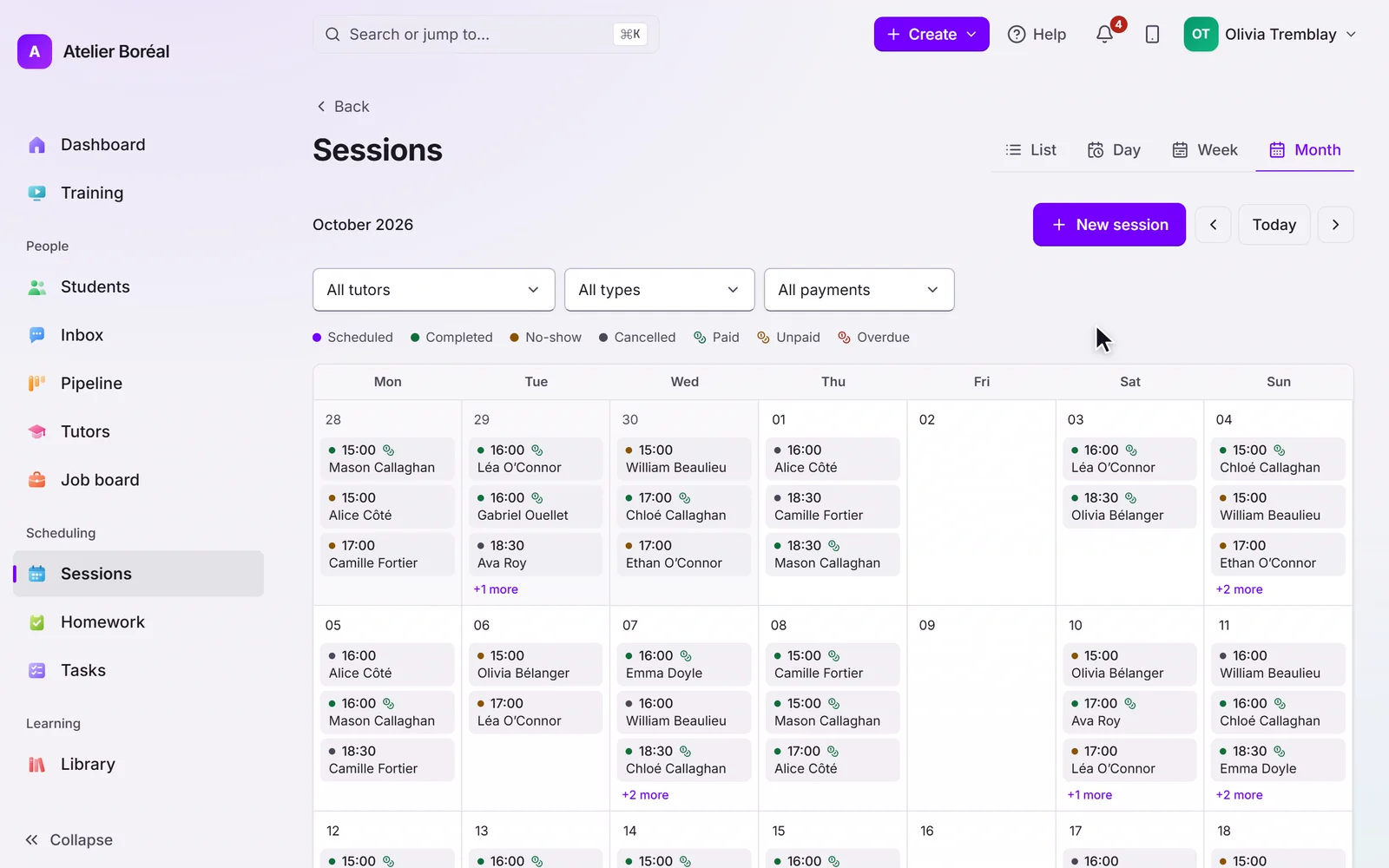
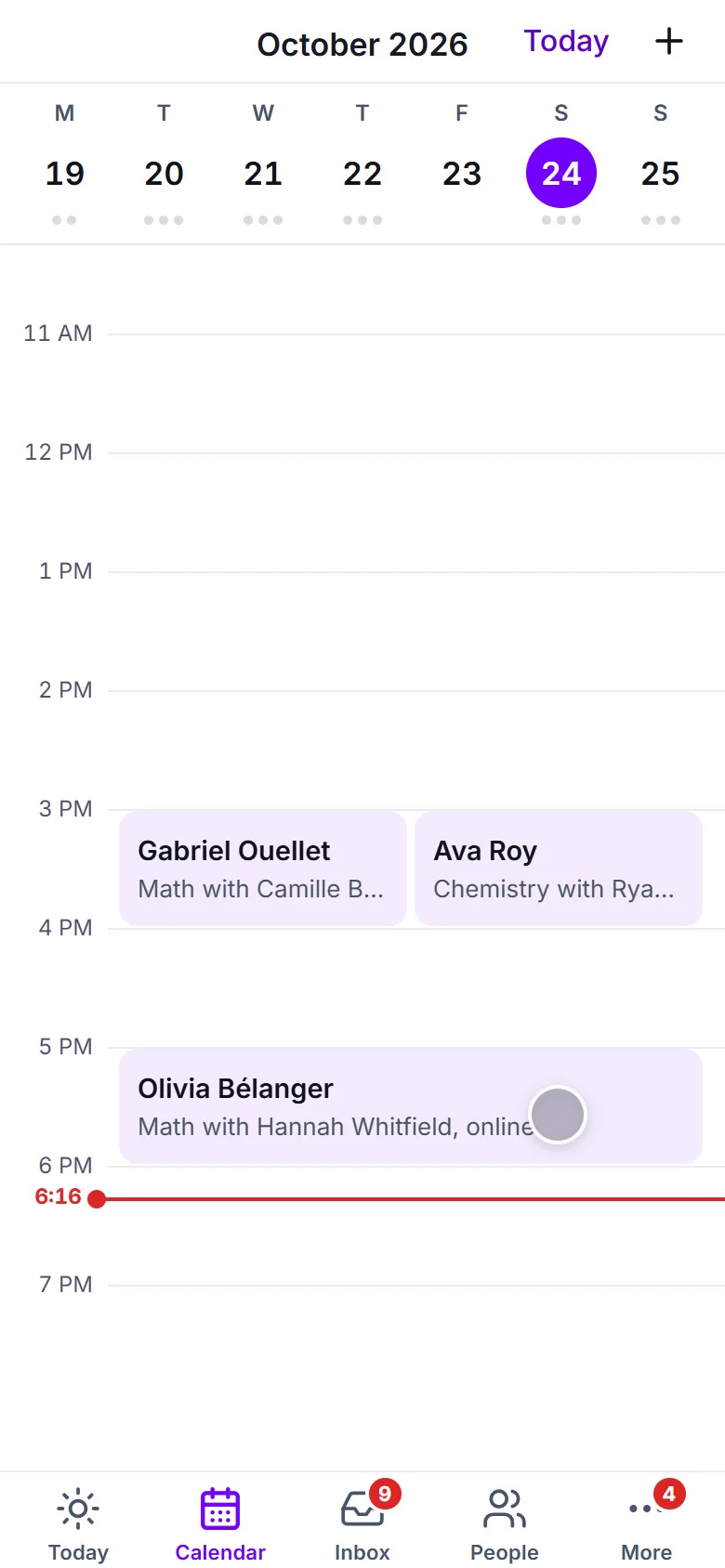
- The session only existed in your calendar. Not theirs. Yours.
- The reminder arrived at a useless moment. Sunday night for a Wednesday session isn’t a reminder, it’s a fun fact.
- Rescheduling meant talking to a human. So they didn’t. They just quietly skipped.
Fix those three and a lot of empty chairs fill themselves.
The three-layer reminder
One reminder is a coin flip. Three reminders, each doing a different job, is a system:
| When | Channel | The job it does |
|---|---|---|
| 24 hours out | Confirms details, offers one-tap reschedule | |
| 2 hours out | SMS | Interrupts the day. This is the one that saves the session |
| Same day, after a miss | Email or SMS | Catches warm intent before it cools into a refund request |
The goal isn’t more messages. Send five and families start filtering you like a dental office. The goal is the right message at the only moment it can still change the outcome, sent automatically, so nobody on your team has to remember whose session is tomorrow.
That third row is the one most businesses skip, and it’s the cheapest revenue in the building. A parent who missed a 4pm session still feels bad about it at 6pm. By Friday they’ve moved on, and now you’re having a conversation about credits instead.

A cancellation policy families actually respect
Write it down. Say it out loud at signup. Something close to: reschedule free up to 24 hours ahead, late cancellations may be charged.
Then, and this is the entire trick, apply it the same way every single time.
A policy enforced by mood isn’t a policy, it’s a vibe. Families read inconsistency instantly, and what they learn from it is that the deadline moves if they sound apologetic enough. A boring rule applied evenly changes behaviour far more than a strict rule you only enforce when you’re already irritated.
Make rebooking easier than texting you
Here’s the test. A parent realises at 8am that Thursday won’t work. How many steps until that session has moved?
If the honest answer involves texting you and waiting for a reply, a real share of those parents will skip instead. Not out of malice. Out of Thursday.
A self-serve portal, where families see open slots and move themselves into one, removes the largest source of quiet churn in a tutoring business. It also removes you from roughly forty text messages a week, which you may find you enjoy.
The bottom line
No-shows feel like a people problem, which is why so many owners try to fix them with guilt. They’re a scheduling problem wearing a people problem’s coat.
Automate the three reminders. Write the policy down and apply it evenly. Let families reschedule without asking anyone’s permission. That’s most of the work, and once it’s set up almost none of it is effort. You get billable hours back, tutors get steadier income, and students stay on pace, which was the actual point.
To see it assembled: scheduling and reminders is where this runs in Pillar OS, and the parent portal is what makes self-serve rescheduling possible. If you’re also rethinking session packages, how you price tutoring shapes attendance more than most owners expect. The rest of the tutoring centre software, billing and tutor pay included, runs from the same calendar.

Nelly Kallini · Co-founder
A high school teacher who has spent years tutoring, so she has been on the receiving end of nearly every feature here: the 8am reschedule, the progress report due tonight, the parent asking whether any of it is working. She writes the operations side of the blog.
